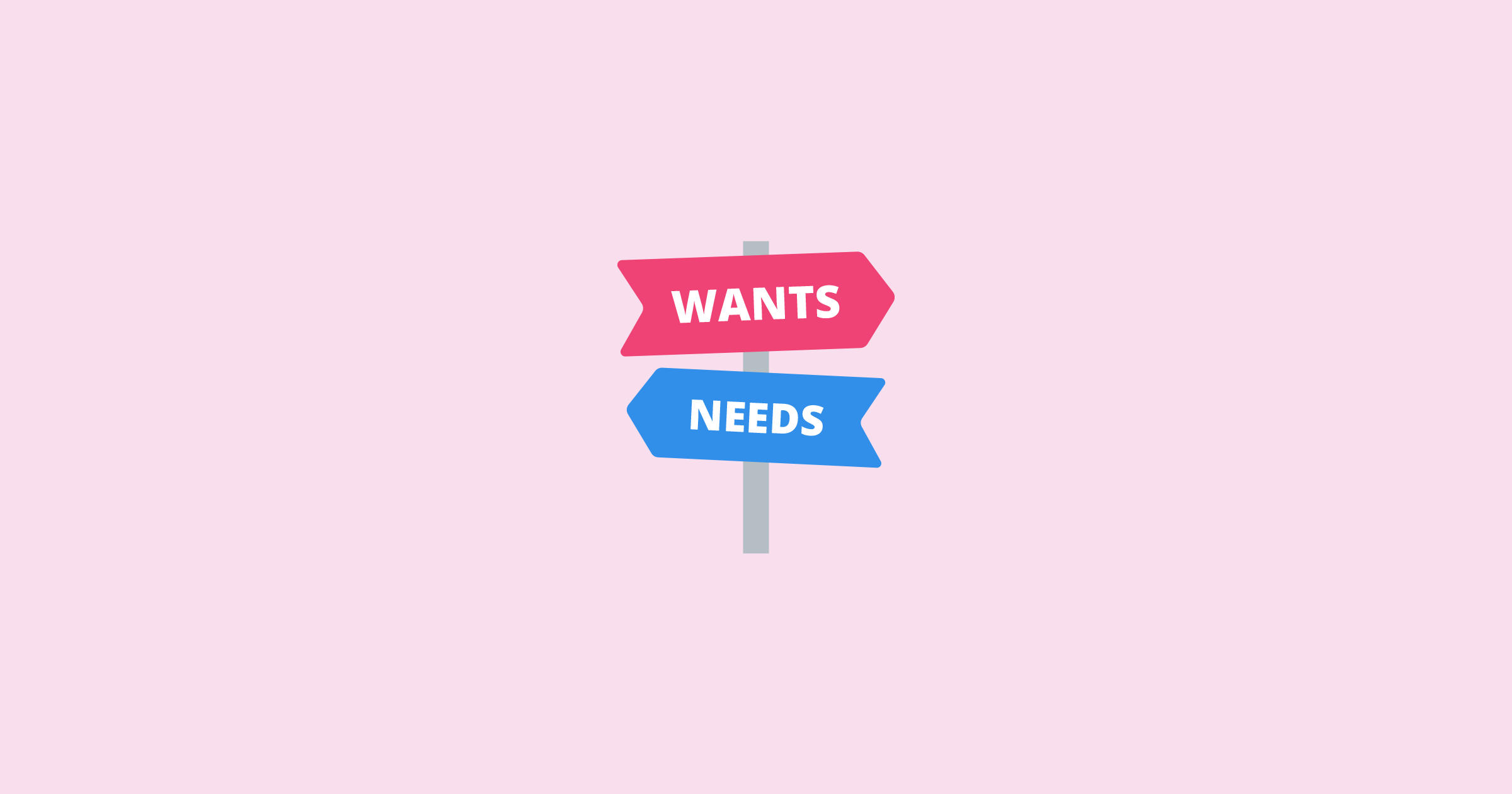
The difference between wants and needs sounds simple enough. Wants are everything that makes life easier and more enjoyable, though you can live without them, strictly speaking.
Needs allow you to survive and function every day, like food, shelter, clothing, and healthcare.
In real life, this line can get blurry. For example, home-cooked meals and restaurant dinners are both classified as food. However, constantly choosing 1 over the other can make a huge difference when you’re on a budget.
You might end up literally paying the price when you can't clearly draw the line between wants and needs. Here are 3 signs you might be confusing them.
1. You frequently go over budget
There are budgeting methods that tell you how much money to allocate to needs and to wants. The 50-30-20 method says you should set aside 50% for needs, 30% for wants, and 20% for savings.
If you find yourself consistently spending more than you planned on things that you’ve classified as essentials, you might be justifying luxuries as needs.
Going over budget happens to everyone as life sometimes throws us curveballs. But if this happens month after month, you might want to take a closer look at your spending habits.
Blowing your budget isn’t always a 1-time event. It can start small with unplanned purchases that felt necessary in the moment.
Examples include buying new clothes that you thought you “needed” even when your closet is full to bursting, or eating out 4 times a week because it’s more convenient than making your own dinner.
None of these purchases are wrong on their own, but if patterns and habits form, they might end up ruining your budget and overall financial health.
A simple gut check before making any purchase is to ask yourself: "If I don't buy this now, would something important in my life actually break down?" If the answer is no, it's probably a want.
Additionally, if you’re buying something you genuinely need but are working on a limited budget, you can look for affordable alternatives that wouldn’t sacrifice quality.
2. You let emotions influence your spending
When you’re constantly exposed to ads and the lifestyles of others, some unnecessary purchases may feel urgent because of the “fear of missing out” or FOMO.
You might’ve seen a huge sale that’s ending soon, a rare item in the exact model you wanted and may never find again, or a promo that tells you to buy more than you need because you’ll “save” money that way.
You may also tell yourself that you need to spend on something because you “deserve it” after a hard week, a stressful event, or a small win.
Treating yourself isn't bad, but if it becomes your go-to justification, it might stop being an occasional treat and turn into a regular excuse to overspend.
To keep emotions from influencing your decisions, set a cooldown period before making an unplanned purchase, like waiting for 24 to 48 hours.
3. Your savings and investments are taking a hit
If your savings barely grow, you're always delaying investing for next time, or you're dipping into money set aside for the future — but still spending freely on your lifestyle — something might be out of balance.
Needs are things that you must put 1st. When wants are treated as needs, they move up in priority and get funded before your emergency savings, retirement contributions, and other financial goals.
A good exercise is to look at your last few months of expenses, savings, and investment allocations to see if you’re on track to meet the goals you’ve set.
If short-term spending is putting long-term goals out of reach, it might be time to reassess your priorities. This also highlights the importance of tracking where your money goes, if you haven’t started yet.
While you’re allowed to enjoy your money, you should be able to see your needs and wants with clarity so you can plan properly for non-necessities.
When you're honest about your spending, you’ll stop wondering where all your money went, and it’ll be easier to stick to your budget while reaching for goals.